





What does Chevy roadside assistance actually help with during day-to-day ownership? Many drivers associate roadside assistance only with towing after a breakdown, but Chevrolet roadside support is designed to help manage several different situations that may interrupt commuting, travel, or long-distance driving. Dead batteries, flat tires, lockouts, fuel interruptions, and unexpected mechanical problems can all create moments where emergency vehicle support becomes part of the ownership experience. Understanding how these support systems operate may help drivers better evaluate what roadside coverage actually does, what situations may be resolved on-site, and when towing or vehicle recovery becomes necessary.
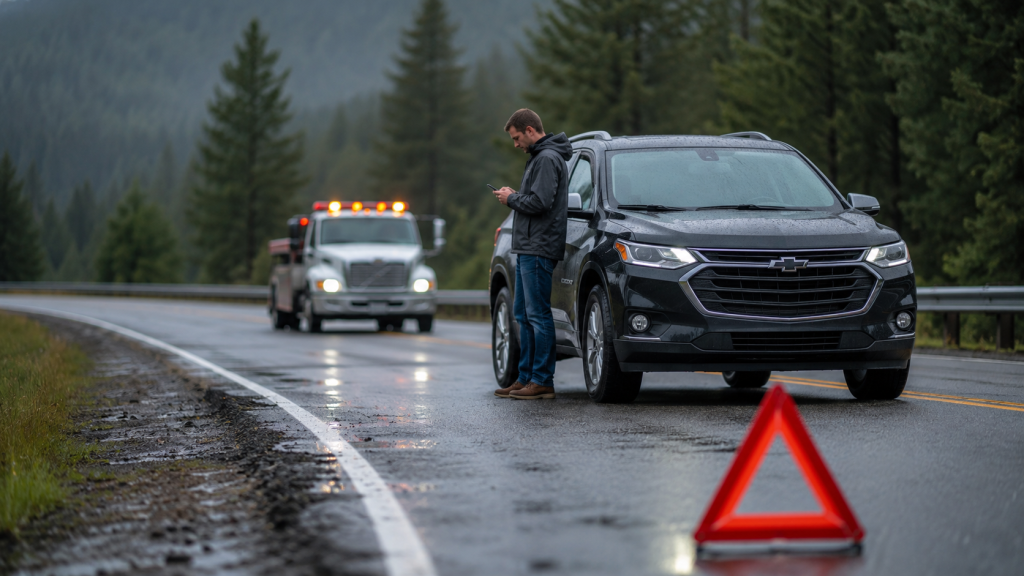
How Chevy Roadside Assistance Works During Unexpected Vehicle Events
Chevrolet roadside assistance operates through dispatch coordination networks that connect drivers with emergency support providers during breakdowns or vehicle emergencies.
When a driver contacts roadside support, the process usually begins by evaluating:
- vehicle location
- current vehicle condition
- surrounding traffic or safety concerns
- type of assistance required
- whether on-site service or towing is more appropriate
That evaluation matters because vehicle emergencies can vary significantly depending on weather, traffic flow, highway access, and the severity of the issue itself.
For example, a dead battery in a parking lot creates a very different recovery process than a mechanical failure during interstate travel. Some situations may allow the vehicle to return to operation quickly, while others may require transportation to a dealership or repair facility.
This is one reason roadside assistance functions differently than simply contacting a towing company independently. The support process often includes:
- dispatch coordination
- recovery assessment
- emergency communication
- service routing
- transportation planning
before the next step is determined.
That structure is designed to help drivers navigate stressful situations more efficiently, especially when unexpected vehicle issues occur away from familiar repair resources.
What Chevy Roadside Assistance May Help Resolve Without Towing
One of the biggest misconceptions surrounding roadside assistance is assuming it only applies after severe mechanical breakdowns. In reality, many roadside support calls involve smaller interruptions that temporarily prevent the vehicle from operating normally.
Chevrolet roadside support may assist with:
- battery jump-start services
- flat tire situations
- lockout assistance
- emergency fuel delivery
- towing coordination
- minor roadside troubleshooting
Battery-related assistance becomes especially common during:
- colder temperatures
- extended parking periods
- aging battery cycles
- unexpected electrical drain conditions
In these cases, roadside support may restore vehicle operation without transporting the vehicle elsewhere.
Flat tire situations may also vary depending on:
- tire damage severity
- wheel condition
- roadside accessibility
- spare tire availability
- traffic safety conditions
Some tire situations may allow drivers to continue traveling after service, while others may still require towing if the vehicle cannot safely return to the road.
Lockout situations work differently because the goal becomes restoring vehicle access rather than addressing drivability problems. That distinction highlights how roadside assistance systems support a wide range of ownership interruptions beyond traditional towing scenarios.
For many drivers, these smaller service situations become the moments where roadside support feels most useful during everyday ownership.
Why Emergency Vehicle Support Matters More During Travel
Roadside assistance often becomes more valuable when drivers are farther from local repair networks, familiar service providers, or home support resources.
A local commuting issue may feel easier to manage because:
- nearby repair facilities are familiar
- transportation alternatives may be available
- support contacts are easier to reach
That changes considerably during:
- interstate driving
- long-distance travel
- vacation trips
- rural driving
- nighttime highway situations
Distance changes how vehicle recovery works because drivers may suddenly need help coordinating:
- towing logistics
- repair access
- emergency communication
- transportation planning
- safe roadside recovery
For example, a highway breakdown during travel may involve questions about:
- where the vehicle should be transported
- whether roadside repair is possible
- how quickly assistance may arrive
- how far the nearest service center may be
This is where Chevrolet dispatch coordination systems may help reduce confusion during stressful roadside events.
Many drivers underestimate how quickly roadside situations may become more difficult when:
- weather conditions worsen
- traffic remains active nearby
- repair access becomes limited
- unfamiliar surroundings create uncertainty
- cell coverage becomes inconsistent
Emergency support coordination exists partly to simplify those recovery decisions while helping drivers manage vehicle issues more safely and efficiently.
What Drivers Should Understand About Coverage and Roadside Limitations
Another common source of confusion involves understanding what roadside assistance can realistically resolve on-site compared to situations requiring towing or repair facility support.
Roadside assistance does not automatically repair every mechanical issue at the roadside. Certain failures involving:
- driveline damage
- cooling system failure
- transmission issues
- severe electrical problems
- major engine concerns
may prevent safe roadside repair entirely.
This distinction matters because roadside support systems are designed primarily around:
- driver safety
- temporary recovery assistance
- emergency coordination
- vehicle transportation support
rather than complete roadside mechanical repair for every problem type.
Drivers should also understand that eligibility and roadside coverage may depend on:
- vehicle age
- warranty coverage
- mileage limitations
- enrollment status
- location accessibility
These factors may affect:
- towing distance
- dispatch availability
- roadside response options
- support timing
Understanding those limitations before an emergency occurs may help drivers prepare more realistically for travel and long-distance driving situations.
How Roadside Support Changes Long-Term Ownership Confidence
Many drivers do not think heavily about roadside assistance until an unexpected problem interrupts normal driving. That pattern appears frequently because roadside value is often tied to unpredictable situations rather than daily use.
A vehicle emergency may involve:
- a dead battery before work
- a flat tire during travel
- a lockout during severe weather
- a highway breakdown far from home
In those moments, roadside support becomes less about abstract coverage and more about:
- response accessibility
- recovery coordination
- reduced uncertainty
- emergency communication
- transportation assistance
For drivers who:
- travel regularly
- commute long distances
- tow trailers
- drive through rural areas
- encounter changing weather conditions
roadside assistance may provide additional confidence that support systems are available before an emergency situation develops.
Chevrolet roadside assistance is ultimately designed to help drivers manage unexpected vehicle interruptions through dispatch coordination, towing support, roadside troubleshooting, and emergency recovery assistance when normal travel conditions suddenly change.
Connect with us


