





Choosing between leasing and financing a Chevrolet is not about which option is better universally. It is about which structure aligns with how the vehicle will be used, how long it will be kept, and how predictable monthly costs need to be. Both options are designed around different ownership behaviors, and understanding how each works helps drivers avoid mismatched commitments.
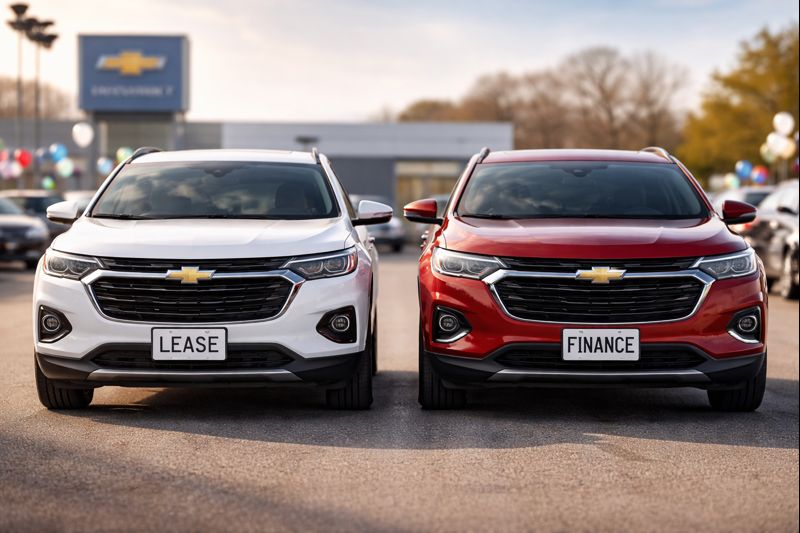
This decision becomes clearer when the mechanics behind leasing and financing are understood rather than compared at a surface level.
The Structural Difference Between Leasing and Financing
Leasing and financing are fundamentally different financial agreements.
When financing a vehicle:
- You are purchasing the vehicle over time
- Monthly payments reduce the loan balance
- Ownership equity builds as the loan is paid down
- The vehicle belongs to you once the loan is satisfied
When leasing a vehicle:
- You are paying for the portion of the vehicle’s value used during the lease term
- Payments are based on depreciation rather than full vehicle cost
- The vehicle is returned at the end of the lease unless purchased
- No ownership equity is built during the lease term
These differences influence cost behavior, flexibility, and long-term value.
Why Leasing Often Has Lower Monthly Payments
Lease payments are typically lower because they are calculated differently than loan payments.
Lease payments are influenced by:
- Vehicle depreciation over the lease term
- Residual value at lease end
- Lease term length
- Money factor or interest equivalent
Because only a portion of the vehicle’s value is being paid, monthly costs are often lower than financing the full purchase price.
When Leasing a Chevrolet Makes Sense
Leasing tends to fit drivers who prioritize predictability and short-term commitments.
Leasing may make sense if:
- You prefer driving newer vehicles every few years
- Annual mileage is consistent and within lease limits
- You want lower monthly payments
- Long-term ownership is not a priority
- You value warranty coverage throughout ownership
For drivers who maintain steady driving patterns, leasing offers cost stability and access to newer technology.
The Tradeoffs and Limitations of Leasing
Leasing introduces constraints that do not exist with financing.
Common lease limitations include:
- Annual mileage caps
- Wear and condition standards at lease return
- Fees for excess mileage or damage
- Limited flexibility for vehicle modification
- No equity at lease end unless purchased
Drivers with unpredictable mileage or changing transportation needs may find these limitations restrictive.
How Financing Builds Long-Term Value
Financing emphasizes ownership and long-term cost efficiency.
Key advantages of financing include:
- Equity accumulation over time
- No mileage restrictions
- Freedom to keep the vehicle as long as desired
- Lower total cost over extended ownership
- Flexibility to sell or trade at any time
Although monthly payments are often higher than leasing, financing spreads full ownership cost across the loan term rather than compressing usage into a shorter period.
When Financing a Chevrolet Makes More Sense
Financing is often the better option for drivers who plan to keep their vehicle long term.
Financing may be the right choice if:
- You drive high annual mileage
- You plan to keep the vehicle beyond five years
- You want payment freedom after the loan is paid off
- You value ownership equity
- You want flexibility without contractual usage limits
For long-term owners, financing typically results in lower overall cost despite higher initial payments.
Depreciation and Long-Term Cost Behavior
Depreciation affects leasing and financing differently.
With leasing:
- Depreciation cost is prepaid during the lease
- You are protected from long-term resale value changes
- Cost is predictable but finite
With financing:
- Depreciation occurs gradually over ownership
- Long-term ownership reduces effective cost
- Value remains if the vehicle is kept beyond loan payoff
Understanding depreciation helps explain why financing becomes more cost-effective over time.
Mileage and Usage Patterns Matter Most
Driving habits are often the deciding factor between leasing and financing.
Consider:
- Annual mileage averages
- Frequency of long-distance travel
- Changes in commute or lifestyle
- Vehicle usage for work or family needs
Drivers who exceed typical lease mileage thresholds often benefit more from financing.
Ownership Flexibility and Exit Options
Financing offers greater exit flexibility.
With financing:
- Vehicles can be sold or traded at any time
- Loan balances can be managed independently
- Ownership decisions are not bound by contract terms
Leasing limits exit options and may involve penalties for early termination.
Making the Right Choice
The right decision depends on aligning financial structure with driving reality.
Leasing emphasizes:
- Short-term usage
- Lower monthly cost
- Predictable ownership windows
Financing emphasizes:
- Long-term value
- Ownership control
- Usage flexibility
Understanding how these structures function allows drivers to choose based on behavior rather than payment alone.
Final Ownership Perspective
Leasing and financing serve different purposes within the Chevrolet lineup under General Motors. Neither option is inherently better. The best choice is the one that supports how the vehicle will actually be driven, maintained, and kept.
Drivers who evaluate usage patterns, ownership timelines, and budget stability make more confident decisions and avoid unnecessary financial tradeoffs.
Connect with us


